
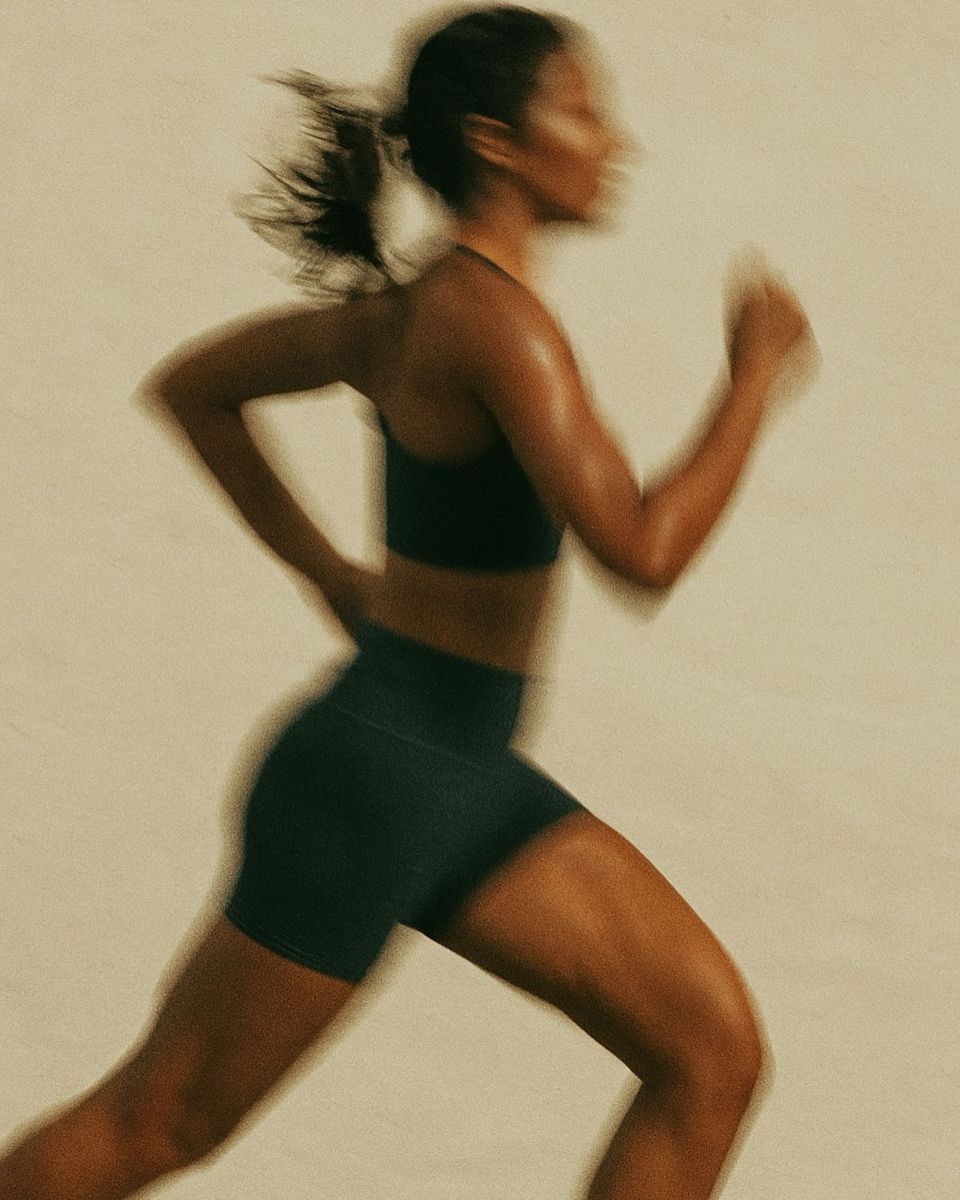
Every morning I jog 5k through the Assiniboine Forest and follow it up with a 30-minute bike ride. If it were the 1960s, people would think I was crazy, especially because I’m a woman.
When Nike co-founder Bill Bowerman encountered New Zealand’s jogging movement, he brought the idea back to Eugene, Oregon. He stated that the exercise was for anyone “six to sixty, male or female.”
The public didn’t agree with this sentiment. The popular rumour that circulated at the time was that jogging, hiking or any other type of endurance exercise would cause the uterus to fall out.
The truth is that concepts of fitness and exercise are relatively new in the North American zeitgeist, and almost immediately after it became normalized, it became male-coded.
The female body was an anomaly in the world of fitness, and men became the baseline.
As exercise became a mainstream fitness industry, the research, technology and innovation built around it continued to treat men as the perfect default.
Metrics tracked by wearable tech like heart rate, metabolic rates and body temperature were calibrated from decades of medical studies that unsurprisingly had mostly male participants.
Women remain underrepresented in the research used to understand athletic performance and recovery. This medical bias is just one example of the gender disparity in fitness; a lot of it is social bias as well.
The Tale of Two Runners
Terrance Stanley Fox hated having cancer. Even more, he hated seeing fellow patients suffer knowing that more research and funding could improve their survival rates. Despite his osteosarcoma diagnosis that led to the amputation of his right leg, Terry decided to run across Canada in hopes of raising just $1 from each of the country’s 24 million residents.
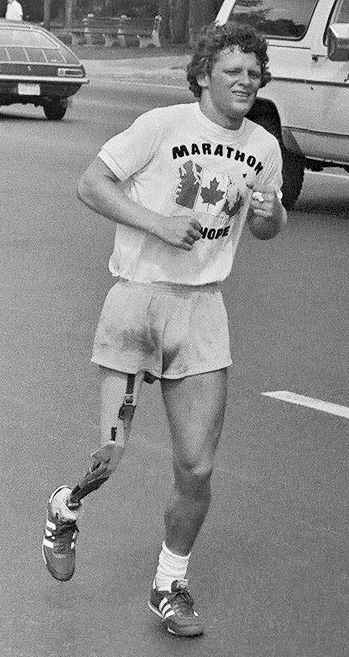
The Marathon of Hope lasted 143 days before his cancer returned and forced him to stop outside Thunder Bay. Even within that short time, the 21-year-old became a national hero. To this day, buildings, bus lines and street names bear his name, and each September schools across the country participate in their own Terry Fox runs.
As heartwarming as his story is, it draws out a sharp contrast. While men used exercise to become legends, women athletes were being assaulted.
Twenty-year-old Kathrine Switzer registered for the 1967 Boston Marathon under the bib number 261. She signed up under the neutral name K.V. Switzer, but on race day her sex was revealed.
She only got a few miles in before co-director John “Jock” Semple jumped from the press truck and attempted to rip her from the race.

Her boyfriend, #390, and other runners noticed the man in street clothes going after Katherine and went on the defensive. They blocked Jock, allowing Katherine to complete the marathon.
In 1972, the Boston Marathon officially welcomed women to compete against men, and Katherine placed third. But even though women were now free to compete in major sports events, the exclusion of women from fitness continued in the lab.
We Need More Studies. Period.
Gender inequality is baked into fitness algorithms, medical studies and the technology developed from those studies. The data and how it’s understood are centred around the male physique, but there’s one very big thing women do that men don’t.
Menstruate.
During the luteal phase, HRV tends to decrease while resting heart rate can rise. For many women, that is a normal physiological shift. Except, to the algorithms that interpret data collected by wearable fitness tech, this signals that the user is tired, unprepared and needs to lay off training.
Ironically, when a naturally cycling woman leaves the luteal phase and starts her period, her heart rate can dip back down, and her HRV can return closer to baseline. To a Fitbit or an Apple Watch, that can look like everything is back to normal. The problem? For many women, this is when period symptoms like cramps and fatigue can be at their worst, and they may actually want to step away from strenuous activity.
When women feel fine, the data can locate a problem. When they feel awful, the data can tell them to get moving.
This confusing behaviour that leaves many women feeling misunderstood is exactly why we need more access to fair medical studies.
Luckily, a few companies are willing to crunch the numbers.
Catching Up to the Female Body
Fitbit and Apple offer cycle tracking, while Garmin, Oura and Whoop are developing their own studies and proprietary models that integrate a wider scope of female health into their products.
In 2026, Oura introduced a women’s health model within Oura Advisor. The LLM combines users’ biometric data with research reviewed by women’s health experts. Users can ask the Oura Advisor personalized and direct questions about cycle changes, symptoms, early menstruation, all the way up to menopause.

This breakthrough development is not meant to replace a doctor’s visit. It’s built on the collaborative research of women’s health experts and is meant to offer a way to break down the barriers of gender disparity in fitness tech by placing well-vetted information in the hands of users.
Influencer Kendall Faith turned to Oura after stopping a decade-long stretch of birth control. She found that the ring, paired with the app, helped her gain a deeper understanding of her body, especially as she plans her family, does CrossFit, and manage her life with ovarian cysts.
While these companies are truly trying to incorporate women’s unique health patterns into their products, they still rely on everyday women to offer data in order to personalize their wearable tech devices. This is a step in the right direction, but the gender gap in fitness and health lies within the research patterns themselves.
WHOOP has started building features that go beyond period logging by examining how cardiovascular metrics change across the menstrual cycle.
The WHOOP 5.0 uses both Hormonal Insights and Cardiovascular Amplitude to analyze long term health patterns in women. It gathers insights from past cycles to measure and adjust HRV, respiratory rates and body temperatures. Whoop does this with only one piece of required data, the start date of a woman’s cycle.
By removing the burden of endless tracking, women who train stop guessing why a hard day feels draining and start planning around it instead.
Still, this correction is new, and it’s incomplete. A handful of companies rebuilding their algorithms doesn’t undo sixty years of research built without half the population in mind. But it’s a start.
Bill Bowerman said exercise was for anyone, six to sixty, male or female. Sixty years later, the industry is finally trying to make that statement true. Oura built an AI that treats women’s bodies as their own baselines. Whoop is allowing women to train with their cycles instead of despite them.
Tomorrow morning, when I run through the forest again, I’ll wonder how many more runs I’ll have to complete before wearable tech, across the board, finally catches up to women.
