
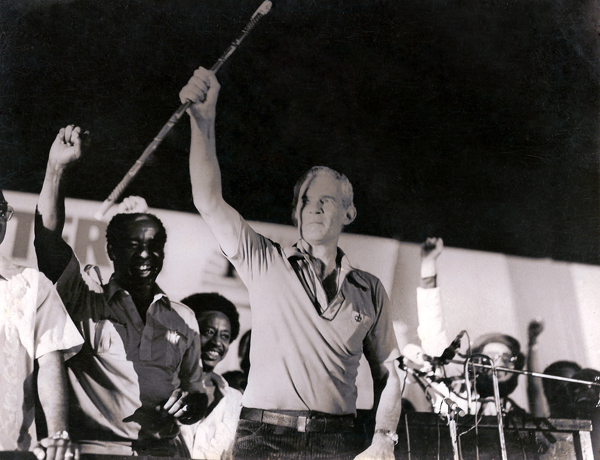
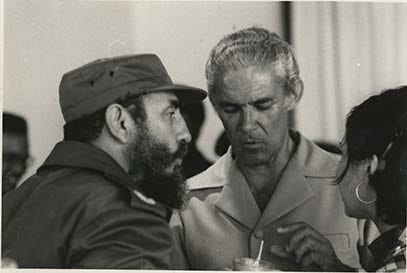
One by one, under the hot Havana sun, Caribbean leaders disembarked at José Martí International Airport to meet with Fidel Castro. They shook hands, formed friendships and spoke of Caribbean self-sustenance via strong political alliances.
That was the 1970s.
Today, Cuba is increasingly isolated, its economy strained and its resources running dangerously low.
It’s a stark difference from the mid-century Caribbean climate, which was rich with dreams of democratic socialism and heavy collaborations with Cuba. These collaborations gained momentum throughout the 70s and 80s as more Caribbean nations stepped away from imperial forces and sought to build economic relationships with their neighbours.
Bite the Hand and Still Get Fed
Well-known leaders such as Michael Manley of Jamaica, Eric Williams of Trinidad and Tobago and Errol Barrow of Barbados aimed to form a strong political bloc that prioritized Caribbean authority and ownership.
These leaders strove to stand against indignity and sought out a different world order where Caribbean nations, although small and young, would be able to feed their own people, educate and keep their own professionals and improve the life expectancies of their new citizens.
One of the most notable actions towards this goal was the rapid expansion of the Cuban medical brigades.
Jamaica adopted the program in the 1970s, and over the following decades thousands of Cuban medical professionals served on the island. Additionally, Cuba took in Caribbean medical students and trained them for free at the Latin American School of Medicine (ELAM) in Havana.
Mixing healthcare, socialism and anticolonialism ensured that underserved communities received vital care and that this care could not be used as a form of colonial control.
Dollar amount: Redacted
Even with these attempts at collaboration, it’s hard to make friends when there’s a giant elephant in the room staring right at you. The United States, of course, particularly hated this newfound friendship between Cuba and Jamaica. They went as far as to conduct covert campaigns against both Castro and Manley, who openly supported each other.
In a memorandum labelled Covert Action Options for Jamaica, the Central Intelligence Agency wrote that Manley must be stopped from turning Jamaica into a totalitarian state.
There is nothing totalitarian about free healthcare and education.
Nonetheless, the redacted letter shows that the CIA’s main mission was to:
“Establish direct confidential contact with Edward Seaga, the leader of the main opposition party, the Jamaican Labor Party (JLP) and also provide guidance, assistance and funds to the JLP in the upcoming Jamaican national election campaign.”
Seaga did win the 1980 election against Manley, and the targeting of Cuba and their brigades continued. Young Jamaicans who were sent to Cuba were now being accused of training as paramilitaries, not professionals. Many had their training programs cancelled despite the Seaga administration failing to create its own replacement programs.
If any of this sounds familiar, it’s because the United States still uses the same tactics.
Washington continues to target Cuba’s medical and training programs by labelling them as a front for human trafficking. Under the table, they are placing pressure on Caribbean countries to discontinue their contracts with Cuba.
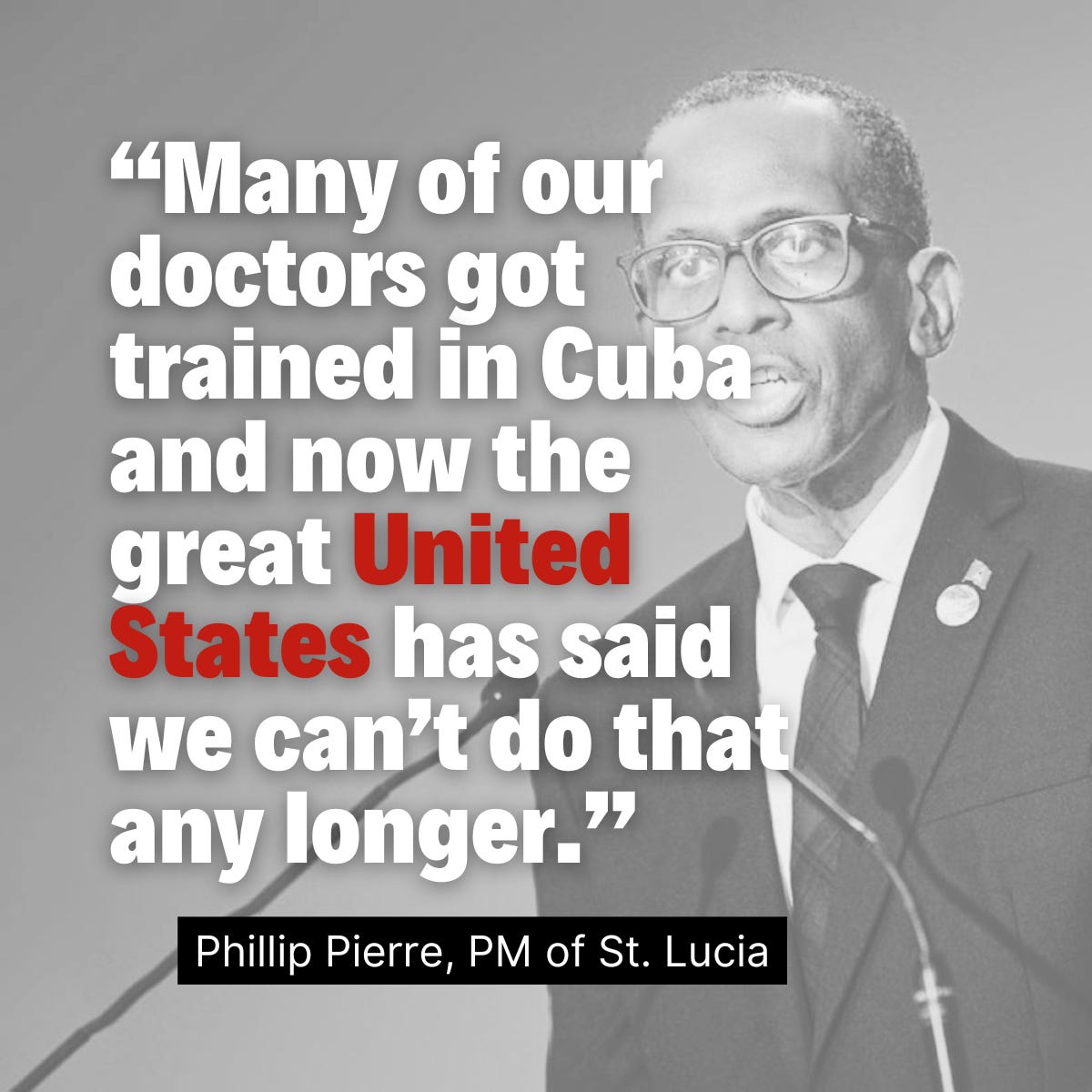
While the US denies this, at least one Caribbean nation, St. Lucia, has come forward with details of this political pressure.
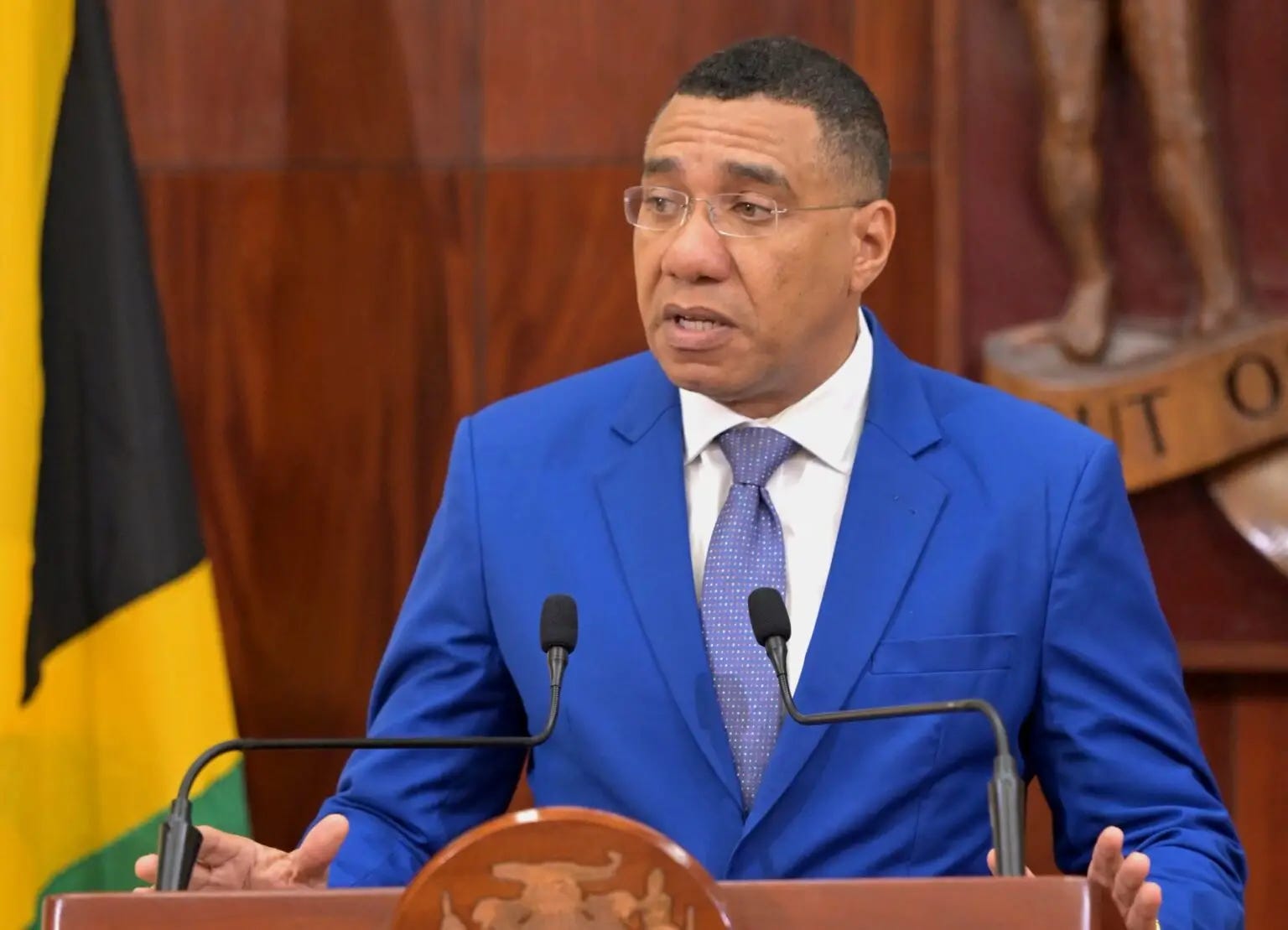
While the US still uses old-school tactics to target Cuba, there is one main difference between then and now: the lack of Jamaican solidarity. Jamaica, now under Andrew Holness’ administration, has formally ended its bilateral medical arrangement with Cuba.
Cuba relies on these contracts from their medical programs to fund their subsidized economy. Especially now, as America continues to starve them out, the medical brigades were a mutually beneficial system of support.
In this ecosystem, Cuban doctors, who earn relatively low wages in Cuba, get to work in neighbouring countries at an increased wage. A portion of their wages goes back to the Cuban government, and underserved communities in host countries receive healthcare. It’s a nuanced system, but it’s been operating in Jamaica for half a century.
Until now.
Jamaica was one of Cuba’s strongest partners. Now, those partnerships are collapsing in real time. The situation is even murkier now that most Caribbean nations have become reliant on tourism and aid from the United States.
Even if countries wanted to stand up for Cuba, they would surely pay a significant price.
The same forces that targeted leaders like Manley and meddled in elections back in the 1980s are still deciding what’s possible for the Caribbean today.
